

Growing marijuana at home in Seville is not legal, but it is not always a crime either. It depends on two things. The first is whether the plants can be seen from the street: Organic Law 4/2015 treats growing in places visible to the public as a serious offence, with fines from €601. The second is what the crop is for: growing only for your own use falls outside the Criminal Code, but if there are signs that the harvest will be sold or passed on to others, it can be a crime punishable by prison. The law sets no permitted number of plants, and the courts assess each case on the quantity and the circumstances. Buying seeds and equipment in a grow shop is legal; what matters legally is what you do with them.
Important note: Green City does not promote growing or using cannabis, and this guide does not explain how to grow. We are a private, non-profit association of adults who already use cannabis. The aim is to inform: to explain what the law says in 2026 and the legal and practical risks of having plants at home. It is not legal advice; for a specific case, talk to a lawyer.
It is one of the most common questions in Seville, especially in spring and summer, when pots start appearing on balconies and rooftops. Plenty of people have heard that “a few plants for yourself is legal”, and just as many that “you can get years in prison”. Both statements are partly true and both fall short.
Here we explain how the Criminal Code and Spain’s public security law fit together, what changes depending on where the plants are, what judges look at when a grow is discovered, the role of grow shops and the neighbour issues to bear in mind if you live in a block of flats.
In this guide
- The two laws that apply
- Where the plants are: compare the scenarios
- How many plants can you have?
- What a judge looks at
- Grow shops and seeds in Seville
- Neighbours, residents’ associations and renting
- Seville: heat, rooftops and balconies
- Growing or joining a club: the legal differences
- Frequently asked questions
The two laws that apply
In Spain, growing cannabis is looked at from two different angles, and it is important not to mix them up.
Criminal Code, article 368
Punishes growing when it is meant to promote, encourage or facilitate other people’s drug use. Growing for your own use, with no intention of passing the harvest to anyone, does not fit this crime.
If there are signs of dealingOrganic Law 4/2015, article 36.18
Treats growing drugs in places visible to the public as a serious offence when it is not a crime. Fines for serious offences range from €601 to €30,000.
If the plants can be seenThat is where the idea that “growing in private is allowed” comes from, and it is not accurate. The law does not authorise it: it simply does not penalise it when it cannot be seen and there is no crime. That is why people call it a grey area.
Where the plants are: compare the scenarios
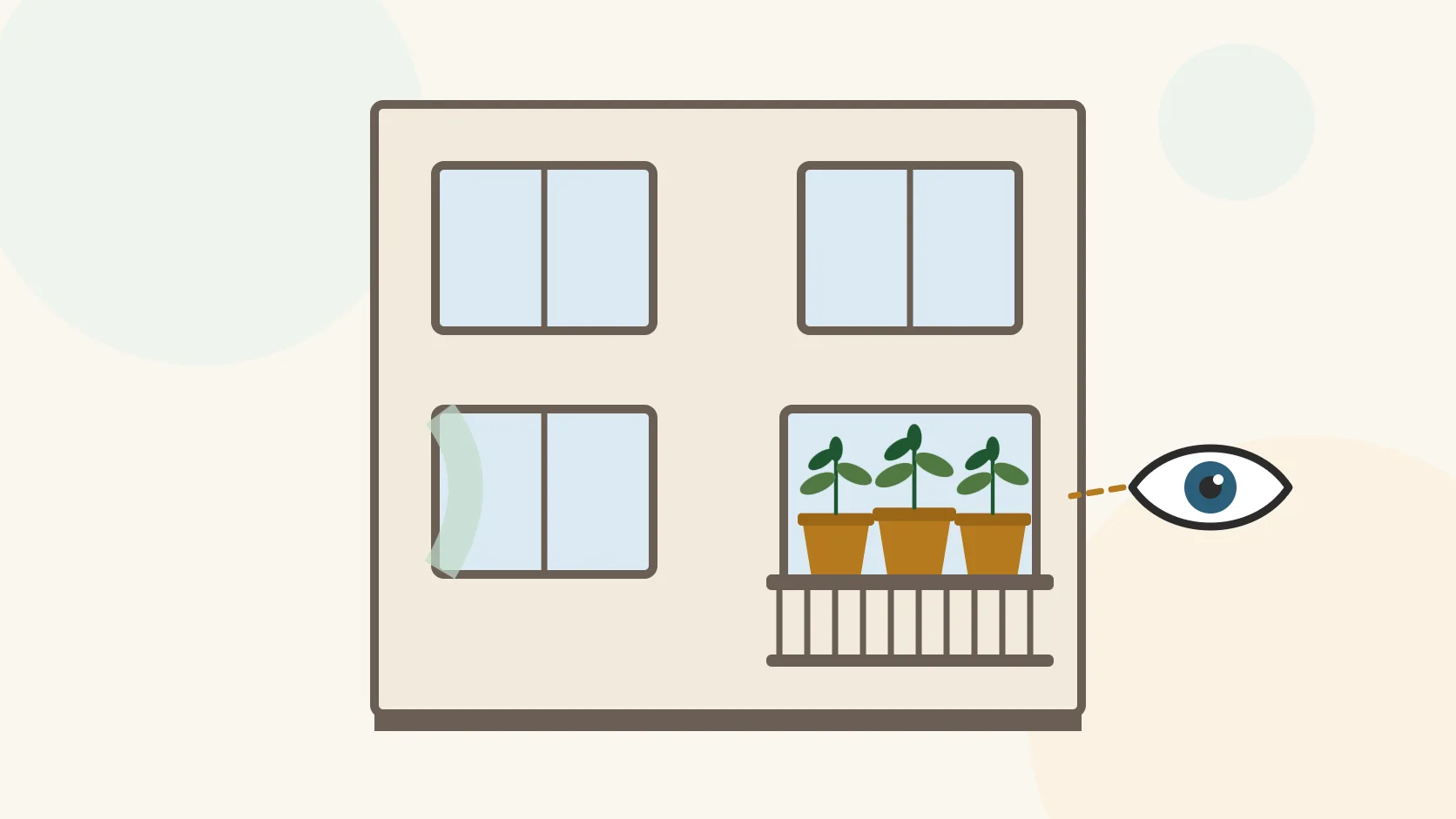
Location changes the consequences a great deal. Pick a scenario to see how the law treats it.
Where are the plants?
Grey area, no penalty. If the grow is small, for your own use and cannot be seen from the street or from shared areas, there is no administrative offence for visibility and it does not fit the crime in article 368.
Bear in mind: the smell, the electricity bill or a complaint from neighbours can bring the police, and if there are signs of selling the picture changes.
General information as of November 2026. Every case depends on its circumstances and on how a judge sees it.
How many plants can you have?
This is the big question, and the short answer is that there is no number. No Spanish law sets how many plants count as personal use. Figures circulate online, but they have no legal basis.
What the courts do is compare the quantity with what a person can reasonably use, and look at the other circumstances. One example: in a 2023 ruling, the Provincial Court of Murcia upheld prison sentences for a grow of 100 plants and described it as a “powerful indication” that the harvest was meant for dealing. To reach that conclusion, the judges compared the figure with what countries that do regulate home growing allow.
For reference, the European countries that have legalised home growing limit it to very few plants: Germany allows three per adult, the Czech Republic three since 2026, Luxembourg four per household and Malta four per household. Those numbers have no legal value in Spain, but they explain why a large grow draws attention.
What a judge looks at
When a grow ends up in court, the key question is whether the harvest was for the grower or for other people. Besides the quantity, these are the factors that usually carry weight:
- Quantity and weight of the harvest
It is compared with reasonable personal use. The further it is from that, the harder it is to argue personal use.
- Distribution equipment
Precision scales, small bags, vacuum sealers or lists of names and amounts point to selling.
- Money and messages
Unexplained cash or messages about deliveries or prices are often decisive.
- Several harvests or strains in storage
Stockpiling a lot of harvested and packaged product fits poorly with personal use.
- Whether the person uses cannabis, and how much
Showing that you are a regular user helps explain the grow, but it does not justify everything.
If someone grows for others, even without charging, it can also fall under article 368, because the crime punishes facilitating other people’s use. That is why sharing your harvest with friends is not legally the same as using it yourself.
Grow shops and seeds in Seville
Many searches on this topic start with “grow shop Seville”. Grow shops are legal businesses: they sell gardening equipment, lighting, growing media and seeds. Cannabis seeds contain no THC, which is why selling them is legal, although they are formally sold as collectors’ items.
What matters legally is not buying in a grow shop but what you do with the seeds afterwards. Germinating and growing them puts you in the territory this guide describes: a grey area if it is private and for your own use, a fine if it is visible and a possible crime if there are signs of dealing. We do not recommend any shop or give growing instructions.
Neighbours, residents’ associations and renting
Beyond the police, the most common problems with a home grow come from living alongside other people:
The smell
Flowering plants smell strongly, and in a block of flats the smell reaches courtyards, landings and windows. It is the most common cause of complaints and of reports by neighbours, which can end in a visit from the police.
The residents’ association
Spain’s Horizontal Property Law bans activities in flats that are a nuisance, unhealthy, harmful, dangerous or unlawful, and the residents’ association can demand that they stop. Shared areas such as rooftops or courtyards are not private spaces: anything placed there can be seen by anyone and may count as visible to the public.
If you rent
Many tenancy agreements ban activities that could cause nuisance or damage, and a grow can lead to a dispute with the landlord. Check your contract first.
Indoor electrics
Indoor grows with powerful lamps and extractor fans overload wiring that was not designed for them. Besides the fire risk, unusual electricity use is one of the signs that can attract attention. Tapping into the mains illegally is also an offence in its own right.
Seville: heat, rooftops and balconies
Seville’s weather makes many people think about growing outdoors, and that is where the greatest legal risk lies. Rooftops of blocks of flats, balconies facing the street and shared inner courtyards are all places where plants can be seen, and visibility is exactly what Law 4/2015 penalises.
The summer heat in Seville also affects how any harvest keeps, and mould is a real health risk. We cover this in cannabis and the summer heat in Seville. And if you are unsure what gets fined in the street, fines for carrying marijuana goes through possession and use in public.

Growing or joining a club: the legal differences
Cannabis social clubs began in Spain from the idea of home growing: if one person can grow for themselves in private, a closed group of adult users could organise that growing together. In 2015 Spain’s Supreme Court set out, in several rulings, the limits within which an association can operate, and the model has worked within those criteria ever since. We explain it in the Spanish cannabis social club model and in how a cannabis social club works in Seville.
It is not a matter of choosing one or the other as if they were products. They are two different legal situations, each with its own rules, and neither makes cannabis legal.
Frequently asked questions
Is it legal to grow marijuana at home in Seville?
It is not legalised, but growing in private, for your own use and out of sight from the street, is not penalised. If the plants are visible to the public it is a serious offence under Organic Law 4/2015 with fines from €601, and if there are signs of selling it can be a crime.
How many cannabis plants can you have in Spain?
There is no legal number. No law sets how many plants count as personal use, and the courts assess each case on the quantity and the other circumstances. A large grow, such as one of 100 plants, has been treated as a strong indication of dealing.
What is the fine for plants on a balcony in Spain?
Growing in places visible to the public is a serious offence under Organic Law 4/2015, with fines from €601 to €30,000, as long as it is not a crime.
Is it legal to buy cannabis seeds in a grow shop in Seville?
Yes. Seeds contain no THC and selling them is legal, as is selling growing equipment. What has legal consequences is germinating and growing them, depending on where and for what.
Can the police enter my home because I have plants?
The home is inviolable in Spain: entry requires the consent of the person living there, a court order or a crime being committed in plain sight. If there are well-founded suspicions of a crime, for example from the smell, electricity use or an investigation, a judge can authorise entry.
Can I give part of my harvest to a friend?
It is not the same as using it yourself. Article 368 of the Criminal Code punishes facilitating other people’s use even when no money changes hands, so passing cannabis to others can be a crime.
Can my residents’ association stop me from growing?
It can demand that nuisance or unlawful activities stop under the Horizontal Property Law, and the smell is usually what triggers complaints. On shared rooftops or courtyards you have no private space, and anything you place there may count as visible.
If any term in this article is new to you, you will find it in our cannabis glossary. And if you want to understand why using at home is not punished while using in the street is, we explain it in is it legal to smoke marijuana in Seville?
Updated in November 2026. There is no bill under way that would change the rules on home growing. We will review this guide if Law 4/2015 or the Criminal Code is reformed.
Clear information from people who know the subject well
Green City Seville is a private association of adults who already use cannabis. Part of what we do is guide members on legal and harm reduction questions like this one. If you are already a user, we will explain how membership works.
FIND OUT HOW TO BECOME A MEMBER Over 10 years in Seville · C. Bartolomé de Medina 24, B1