

The cannabis social club is a Spanish model, and it was born out of a legal contradiction: consuming cannabis in private has never been a crime in Spain, but buying it is a crime for whoever sells it. A group of consumers who form an association, grow together and share out what they have grown among themselves moves through the gap that contradiction leaves. There is no law regulating these clubs. What exists is a right of association, conduct that carries no criminal offence, and a line drawn by the Supreme Court separating shared self-consumption from drug trafficking. The model is more than thirty years old and it travels under the name given to it here: cannabis social club.
When someone walks into a cannabis association in Seville, Barcelona or Bilbao for the first time, they usually ask the same thing: «how can this possibly be legal?». The question is well put, and the short answer («it is not exactly legal, it is that it is not a crime») leaves almost everybody equally lost.
It is worth telling in full, because the history explains the present. How a club runs, its apparently excessive rules, the paperwork, the insistence that you are not a customer: none of that is a whim. All of it answers to specific court decisions, taken on specific dates, often after somebody tried it another way and ended up convicted.
What you will find here
- What a cannabis social club is and what it is not
- The legal gap everything grew from
- Thirty years of history in seven moments
- The Supreme Court criteria
- Why the regions could not regulate it
- Why the model works this way and no other
- What marks out a serious club
- What this means in Seville
- Frequently asked questions
What a cannabis social club is and what it is not
A cannabis social club is a non-profit association, formed under the right of association recognised in Article 22 of the Spanish Constitution and regulated by Organic Law 1/2002, made up of adults who already consume cannabis and who organise to supply themselves without going through the black market. Cultivation is collective, consumption happens inside the premises, and nothing leaves.
Put like that it sounds simple. The problem is everything people take for granted that the model does not include.
| What many people expect | What the model actually is |
|---|---|
| A shop where you buy | An association you become part of. There is no sale: there is a contribution to a collective cultivation that has already taken place. |
| A place you walk into and order | A private space you access as a member, with prior registration and, in practice, an introduction from someone who is already in. |
| A business | A non-profit entity. The margin cannot be distributed: that is the difference a judge looks at. |
| A Dutch-style coffee shop | A different model, behind closed doors and with no sale to the public. The comparison is developed in cannabis coffee shop in Seville. |
| Something regulated, with a licence | An activity with no law of its own, resting on case law, and varying a great deal from one town to the next. |
If the terms blur together (club, association, CSC, aso, coffee shop), they are sorted out one by one in the CSC terminology hub.
The legal gap everything grew from
The whole model rests on an asymmetry in Spanish law that is worth understanding properly, because it is the central piece. Spain has never criminally punished drug use or possession for personal use. What Article 368 of the Criminal Code punishes is cultivation, preparation, trafficking and the promotion of consumption by others.
Neither a crime nor an administrative offence. It never has been. At home or in a private space, it falls outside the reach of the rule.
A serious infringement under Organic Law 4/2015 on the protection of public safety. No criminal record, but a financial penalty. The amounts are in the fine for carrying marijuana.
Article 368 of the Criminal Code. This covers any cultivation intended for people other than oneself, and this is the real risk for any club that drifts from the model.
Between those three bands sits a question the Criminal Code does not resolve: if consuming is free and buying is a crime for whoever sells, where does what gets consumed come from? For decades the only practical answer was the black market. The Spanish association movement proposed another: that consumers grow what they are going to consume, together, with nothing crossing the door.
If growing for yourself is not a crime, and if several consumers can grow together without a third party appearing anywhere, the activity does not fit what Article 368 punishes. The entire construction of the cannabis social club comes from there. And so does all its fragility: the day that third party appears, the activity changes legal category.
The whole model lives at that midpoint: consumers supplying one another with no third party appearing anywhere.
Thirty years of history in seven moments
The model was not designed in an office. It took shape through attempts, complaints filed on purpose, and rulings that sometimes agreed and sometimes did not.
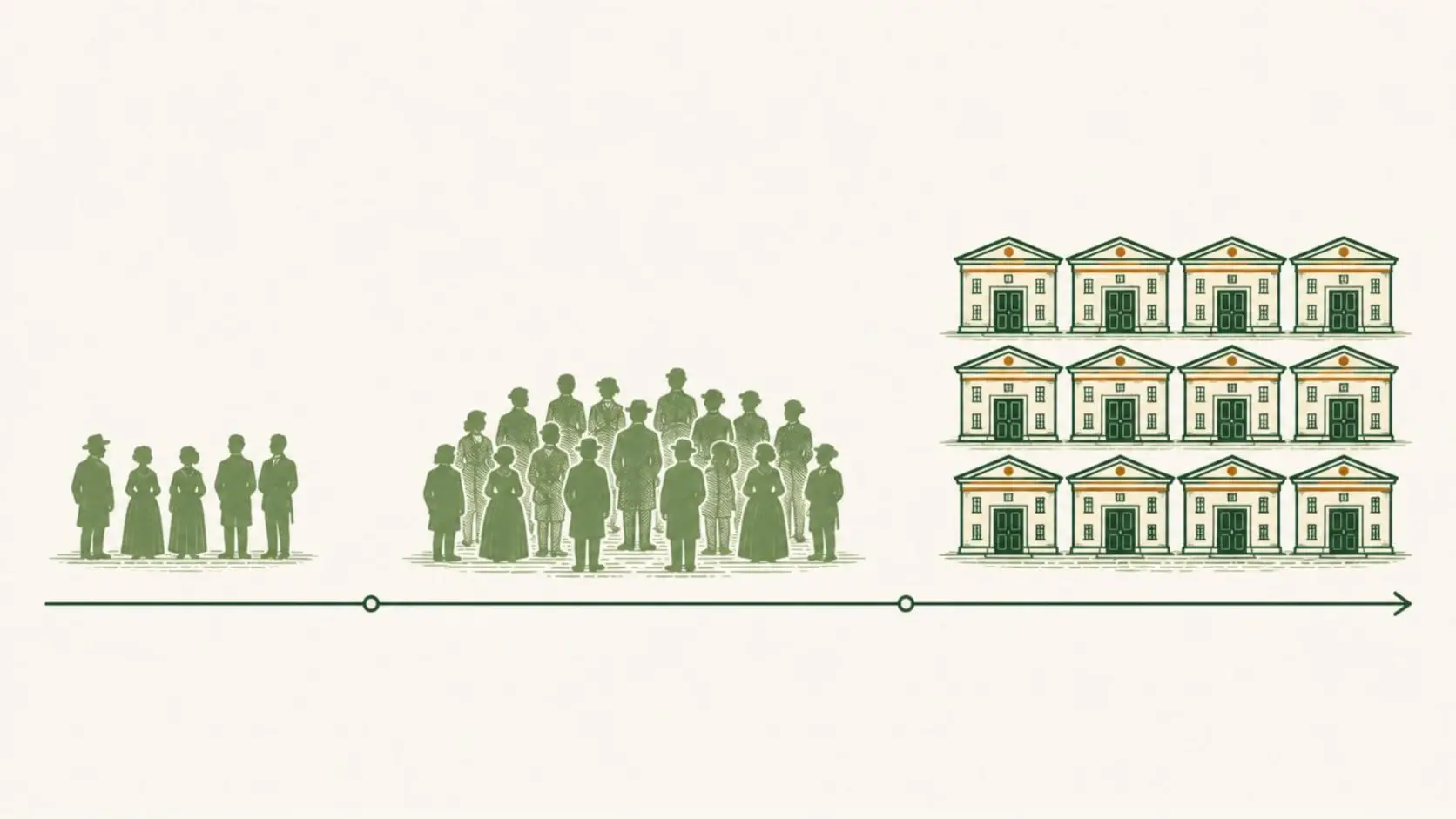
- 1991
ARSEC is founded in Barcelona
The Ramón Santos Association for the Study of Cannabis is registered, the first cannabis association in Spain. It frames cannabis use as a civil liberties question, and its statutes end up serving as a template for dozens of later associations. The preamble of the 2017 Catalan law itself recognises it as the first to carry out collective cultivation.
- 1993
Legal provocation: an announced plantation
ARSEC organises a collective cultivation in the province of Tarragona, with a few dozen members and a couple of plants each, and notifies the Public Prosecutor’s Office. It was not hiding: it wanted a clear judicial answer on whether growing for shared personal use was a crime. The strategy was to ask out loud.
- 1997
The Supreme Court cuts in, and the movement spreads
The Supreme Court overturns ARSEC’s initial acquittal. The blow does not stop the movement: that same year Kalamudia is founded in Bilbao, taking the idea further with a public planting of hundreds of plants. The model jumps from Catalonia to the Basque Country and starts being called a club.
- 2002
From activism to the stable club
The first associations appear that work like what we understand today as a cannabis social club: their own premises, member registration, continuous cultivation and consumption inside. A political claim becomes a way of organising.
- 2012
The expansion
The model grows fast and Catalonia accounts for a large share of the new associations. Rapid growth brings everything: serious projects, and premises using the association form as a commercial cover. That mixture is what eventually provokes the courts’ response.
- 2015
The ruling that draws the line
The full Second Chamber of the Supreme Court issues judgment 484/2015 and establishes the criteria separating shared self-consumption from drug trafficking. It is the decision that most shapes the daily running of any Spanish club, and we come back to it in the next section.
- 2017-2018
The regions try, and the Constitutional Court decides
Navarre and Catalonia pass their own laws to regulate the associations. The Constitutional Court annuls both for encroaching on state powers. The Basque Country saves its article, though with an interpretation that changes nothing substantive. After this, the model carries on with no law of its own.
What stands out about the path is that none of it came from a legislative proposal. The model was built by consumer associations presenting themselves voluntarily to prosecutors, and it was bounded by courts resolving individual cases. Hence a result that is so solid on some points and so ambiguous on others.
The Supreme Court criteria
Judgment 484/2015 is the document every club should have read. The Supreme Court did not ban cannabis associations, and it did not bless them either. What it did was describe when the activity stops being shared self-consumption and becomes a crime. These are the axes of that frontier.
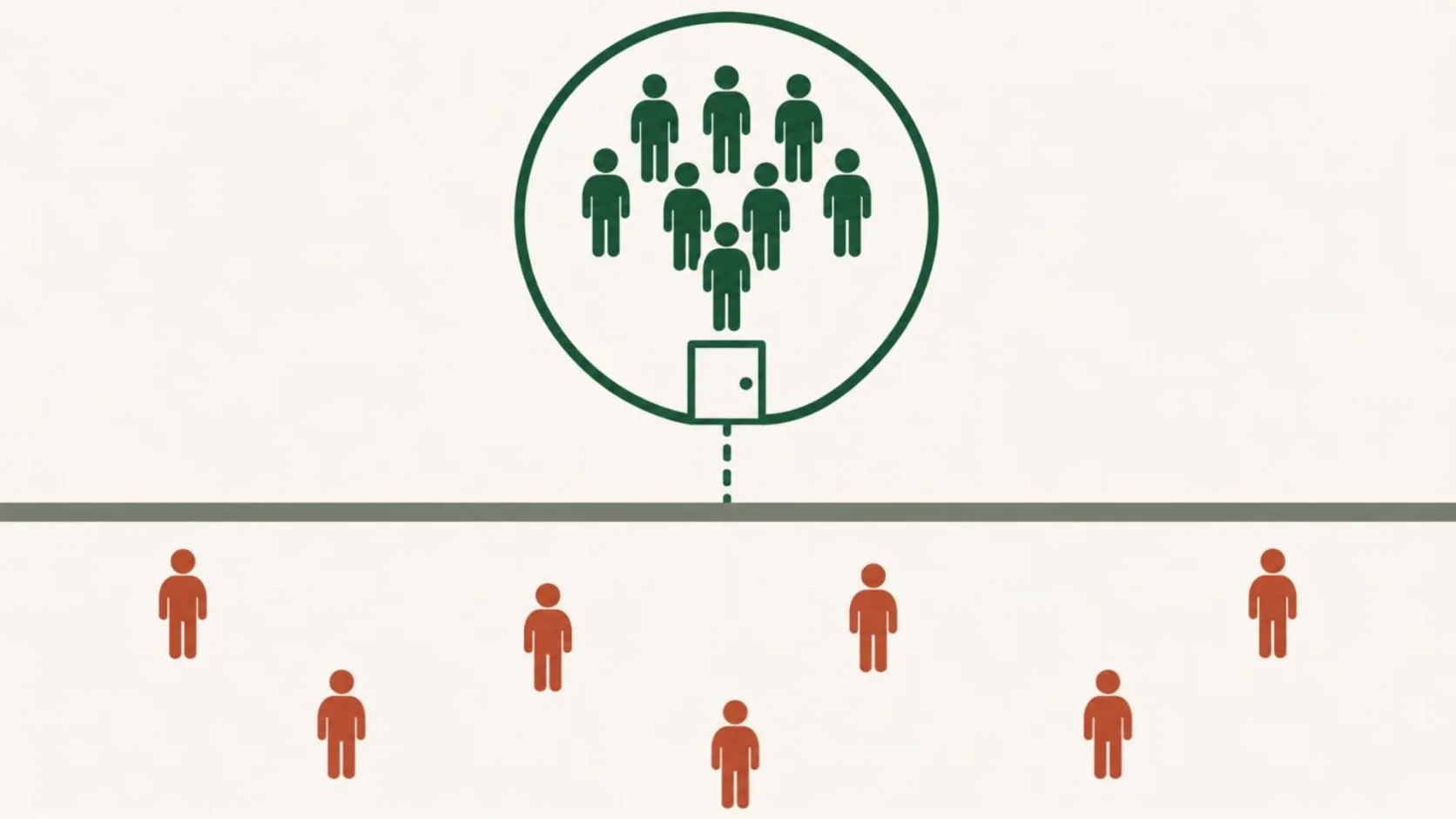
A closed, known group
The circle of consumers has to be determined in advance. An association with doors open to whoever walks past does not qualify, however many forms get signed at the entrance.
Existing consumers
All members must already be consumers. If the club could end up introducing someone to cannabis, the conduct falls into promoting consumption by others, which is exactly what Article 368 punishes.
Strictly private setting
Consumption has to happen inside, in an enclosed space. No consumption at the door and no material leaving the premises for anywhere.
Proportionate quantity
Cultivation matches a reasonable forecast of what members will consume, with no stockpiling or surplus. The risk of diffusion to third parties is what the court weighs.
A reasonable number of members
In the 2015 case, the Supreme Court held that 290 members was a clearly excessive figure for shared consumption to still apply. It set no maximum, but it made clear that size matters.
Genuinely non-profit
Being registered as a non-profit entity is not enough. The court looks at whether, in practice, there is a profit that someone is taking.
The Supreme Court has held that continuous distribution of cannabis, even among members of the association, exceeds shared self-consumption and may constitute trafficking, because it facilitates consumption and creates a risk of diffusion. That is why the model is a conditional tolerance rather than a permission: the line exists, it is written down, and it has been crossed in a fair number of cases. Judgment 169/2026, from April this year, is the most recent reminder that the courts are still watching. If you want the legal detail, our colleagues at Lawyer Sierra, specialists in cannabis law, go through it criterion by criterion.
Check the criteria against a club you know
Tick what applies. This is not legal advice or a ruling: it is a way of seeing what weighs on that frontier, and of knowing what to ask before joining anywhere.
Nothing ticked yetTick the boxes you recognise. Each one matches one of the criteria the courts weigh.
Why the regions could not regulate it
Between 2014 and 2017 three autonomous communities tried to give the model legal certainty with their own rules. The outcome says a lot about why there is still no law.
Navarre
Regional Law 24/2014, regulating collectives of cannabis users. Annulled by the Constitutional Court in judgment 144/2017.
Catalonia
Law 13/2017 of 6 July, on cannabis consumer associations. The most complete of the three: compulsory registration, health conditions and operating limits. Annulled by judgment 100/2018 for encroaching on state powers.
Basque Country
Article 83 of Law 1/2016 on integrated addiction care. The Constitutional Court saved it in judgment 29/2018 through a conforming interpretation: the article stands provided it is understood as authorising nothing that state criminal law prohibits.
The underlying reason is the division of powers. Criminal legislation is exclusively a state matter, and so are pharmaceutical product legislation and public safety. A region can legislate on public health or associations, but it cannot authorise what the Criminal Code punishes. That is where Navarre and Catalonia came unstuck, and why the Basque article survived only once emptied of practical effect.
The consequence for a member is very concrete: Supreme Court case law applies across Spain, but actual tolerance varies enormously by region and by town hall. A club can run normally for years in one city and be unviable in another two hundred kilometres away.
Why the model works this way and no other
With all of the above on the table, a club’s rules stop looking arbitrary. Each one answers to a judicial criterion.
- You are asked to register before entering
Because the group has to be determined in advance. Registration done on the spot, at the door, is precisely what the courts do not accept.
- You are asked whether you already consume
Because the association can only be made up of existing consumers. It is not an awkward formality for its own sake: it is criterion 2.
- An existing member almost always has to introduce you
Because the circle has to be closed and verifiable. How invitations and waiting lists work is covered in invitations and waiting lists at Seville clubs.
- You cannot consume outside or carry anything in view
Because the private setting is constitutive of the model, and because in the street Organic Law 4/2015 applies with its administrative penalty.
- There is no advertising or promotion
Because promoting consumption by others is in Article 368. That is why you will find no product offering on this website, no product prices, and nothing resembling a catalogue.
- You are not a customer, you are a member
Because sale is exactly the figure that would turn the activity into a crime. The distinction sounds like formalism and it is the opposite: it is the basis of everything, developed in Seville cannabis association.
The day-to-day running, with the practical detail, is in how a cannabis social club works in Seville.
What marks out a serious club
If the model rests on strict compliance with a set of criteria, a club that does not meet them is not only risking itself: it exposes its members. So it pays to know what to look at.
| Sign | What it indicates |
|---|---|
| Asks for prior registration and ID | Good sign Meets the determined-group criterion. |
| Works through invitation or member introduction | Good sign Closed and verifiable circle. |
| Recruits you on social media or in the street | Bad sign That is promoting consumption by others and it breaks the closed character. |
| Lets you in the same day with nothing else | Bad sign Turns registration into an empty formality. |
| Sells to you to take away | Bad sign Leaves the private setting and the whole model. |
| Has statutes, registration and accounts | Good sign There is a real association structure behind it. |
The full list of warning signs, including premises using the association form as a front, is in how to tell if a club is legal or a scam, and the most repeated myths are in myths and truths.
What this means in Seville
Andalusia did not try to regulate cannabis associations the way Navarre, Catalonia and the Basque Country did. Here the model runs directly on the state framework: right of association, no criminal offence for private consumption, and the Supreme Court criteria. With no regional rule in between, the interpretive margin is set by the courts and by local practice.
That has a practical reading for anyone considering joining in Seville: a club’s track record tells you something. Premises that have been running for more than ten years have been through a fair number of shifts in approach without incident, and that is information. Green City Sevilla has been in the city for over a decade, at the same address on Calle Bartolomé de Medina, and access follows the full model: prior registration, members who are already consumers, consumption only inside, and no advertising.
For visitors there is an extra point. The Netherlands has the coffee shop, with sale to the public; Germany has trialled cultivation associations of a different kind; the United States has commercial dispensaries. None of those schemes resembles the Spanish one, and assuming otherwise is the source of ninety per cent of the misunderstandings we see at the door. If you are visiting, it is worth reading the guide to visiting a cannabis club in Seville as a tourist first.
Important note: Green City does not promote cannabis use. We are a private non-profit association of adults who are already consumers. This article is historical and legal background with an informative purpose: it does not describe any product offering, does not invite anyone to consume and does not constitute legal advice. The general legal framework in Spain is summarised in is it legal to smoke marijuana in Seville? and for a specific case the sensible step is to consult a lawyer.
Frequently asked questions about the Spanish model
Are cannabis social clubs legal in Spain?
There is no law regulating them, so the precise answer is that they are not illegal in themselves. Forming a non-profit association of adult consumers is covered by the right of association, and private consumption is not a crime. The activity holds up as long as the criteria set by the Supreme Court are met strictly. If they are breached, there can be criminal liability for drug trafficking.
How many cannabis clubs are there in Spain?
There is no official count, because no specific register exists for this figure. Sector estimates range from several hundred to more than fifteen hundred registered associations, heavily concentrated in Catalonia and the Basque Country. The range is wide precisely because the absence of a register makes them hard to count.
Why is it called the «Spanish model»?
Because it was born here and travelled from here. The term cannabis social club is used internationally today to describe consumer associations that supply themselves without commercial aims, and the reference scheme is the one that took shape in Spain from the 1990s onwards.
Can a club sell cannabis to its members?
No, and this is the most important point of all. There is no sale. What exists is a member’s contribution to the collective cultivation they are themselves part of. The difference is legal rather than rhetorical: a sale would reintroduce the third party and with it Article 368 of the Criminal Code.
Can anyone join a cannabis social club?
No. You must be of legal age, already be a consumer, and complete registration before accessing. In practice, almost all clubs also require an existing member to introduce you. Those requirements are not commercial filters: they come directly from the judicial criteria.
What happened to the Catalan cannabis club law?
Law 13/2017 of the Catalan Parliament regulated consumer associations in considerable detail, and the Constitutional Court annulled it in 2018 for encroaching on exclusive state powers. The same had happened earlier with Navarre’s 2014 regional law. The only regional provision that survived was Article 83 of the Basque law, and only through a conforming interpretation that leaves it unable to authorise anything.
Is a cannabis club law expected in Spain?
Initiatives have been tabled and parliamentary working groups set up across several terms, without any of them producing a rule. A royal decree on medical cannabis was approved in late 2025, which follows a completely different route and does not affect the associations: it is explained in medical cannabis in Spain.
More than ten years applying this model in Seville
Green City Sevilla is a private non-profit association of adults who are already consumers. If that is you and you want to know how access works, here it is step by step.
HOW TO BECOME A MEMBER More than 10 years in Seville · C. Bartolomé de Medina 24, B1