

CBD in Seville follows the same rules as in the rest of Spain, and there is no single law that covers everything. Cannabidiol itself is not a controlled substance, but not every product containing it is legal. CBD cosmetics are sold openly. Oils and edibles you swallow are not authorised as food, because in the European Union CBD is a “novel food” that still has no approval. CBD flowers are the trickiest case: Spain’s Ministry of Agriculture treats them as cannabis under drug law whatever their THC level, which is why they are sold as collectors’ items. Carrying or smoking them in public can lead to a fine, and CBD will not protect you from a positive roadside test if the product contains traces of THC.
Important note: Green City does not sell CBD or recommend any brand or shop. We are a private, non-profit association of adults who already use cannabis. This article is for information: it explains what the rules say in 2026 so that, if you are interested in CBD, you know what you are buying and the legal risks of each format. It is not medical or legal advice.
Seville has CBD shops in almost every neighbourhood, and you can order online in a couple of clicks. That makes it feel as if anything labelled “CBD” is legal and can be used anywhere. The reality is more complicated, and it depends a lot on which product you are holding.
This guide explains what CBD is, what Spanish and EU rules say at the end of 2026, which formats are allowed and which are not, what happens if the police stop you with CBD flowers, whether it can show up in a roadside test and what to check before you buy.
In this guide
- What CBD is and how it differs from THC
- Is CBD legal in Seville?
- Format by format: check your product
- CBD flowers: why they are the greyest area
- If the police stop you with CBD
- CBD and driving
- What to check before buying CBD in Seville
- What is known (and what is not) about its effects
- Frequently asked questions
What CBD is and how it differs from THC
Cannabidiol, or CBD, is one of more than a hundred cannabinoids in the cannabis plant. Unlike THC, it does not produce the psychoactive effect associated with cannabis: it does not get you high. That is why it has become popular in cosmetics, oils and flowers from hemp varieties with very little THC.
Both act on the endocannabinoid system, but in different ways. THC directly activates the CB1 receptors in the brain, which are responsible for the high. CBD barely binds to them and works through other pathways. For the full comparison, see CBD vs THC: a practical guide, and for the underlying mechanism, the endocannabinoid system explained simply.
- No psychoactive effect
- Not a controlled substance
- Legality depends on the product format
- Responsible for the cannabis high
- Controlled substance
- What the roadside saliva test detects
Is CBD legal in Seville?
Seville has no rules of its own on CBD: Spanish and EU law apply. And Spain has no comprehensive CBD law that simply sets out what can be sold, how and where. What exists is a set of rules from different areas that have to be read together.
- The substance. Cannabidiol is not on the lists of narcotic drugs. In 2020 the Court of Justice of the European Union ruled in the Kanavape case that CBD extracted from the whole plant cannot be considered a narcotic, and that a country cannot simply ban its sale if it was lawfully produced in another member state.
- The plant. This is where it gets complicated. According to Spain’s Ministry of Agriculture, the flowering tops, meaning the buds, count as cannabis under drug law regardless of their THC content. The 0.3 % THC limit decides which hemp varieties can be grown as a farm crop, but it does not on its own allow flowers to be sold.
- The use. What you can do with a product depends on how it is registered: as a cosmetic, a food, a medicine or an item not meant for consumption.
In practice, CBD is legal in some formats and not in others, and the same cannabinoid can be in a perfectly legal product or in one that the law does not allow to be used the way it is used.
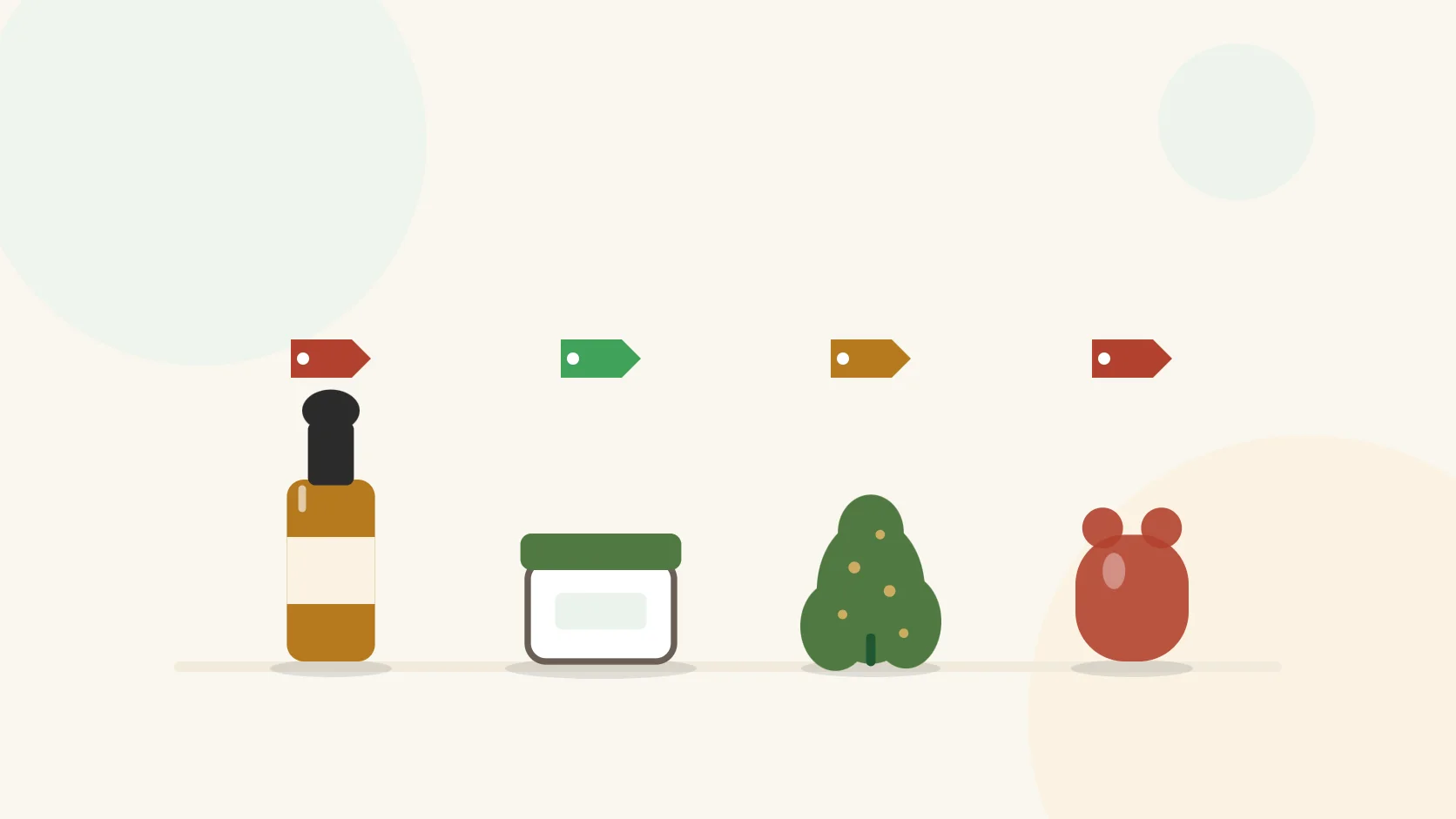
Format by format: check your product
Choose a type of product to see its legal status in Spain, what happens if you carry it in public and whether it can affect you at a roadside check.
Which CBD product do you have?
Sold legally as a cosmetic. Creams, balms and oils for external use with CBD fall under cosmetics rules, as long as they comply with them and do not promise to cure anything. This is the format with the fewest legal issues.
- In public
- No problem.
- Driving
- For external use, it is not expected to affect the saliva test.
General information on Spanish and EU rules as of November 2026. It does not replace legal advice.
Two details are worth keeping in mind. First, the fact that a product is sold in a shop or on a Spanish website does not mean its use is authorised. Many oils are labelled “for external use” or “cosmetic use” precisely because they cannot be sold as food. Second, no CBD product can be advertised as a treatment for a disease unless it is an authorised medicine.
Why oils and edibles are not authorised as food
In the European Union, CBD is considered a “novel food”, meaning an ingredient that needs a safety assessment before it can be sold to eat or drink. In February 2026 the European Food Safety Authority (EFSA) set, for the first time, a provisional safe intake level of about 2 mg a day for a 70 kg adult, far below what most oils on the market contain. In September 2026 it published its first positive opinion on a synthetic CBD for food supplements, with the same 2 mg daily maximum. Until the European Commission authorises a specific product, CBD oils and edibles cannot legally be sold as food in Spain.
CBD flowers: why they are the greyest area
CBD flowers are buds from hemp varieties with very little THC. In Spain they are formally sold as collectors’ items, for decoration or for aromatherapy, not for smoking. That label exists because there is no legal route to sell them for consumption.
The underlying problem is the one described above: under drug law, the flowering tops of cannabis are cannabis, whatever their THC level. To the eye, a CBD flower and a marijuana bud look almost identical, and only a lab test can tell them apart. In practice, businesses in the sector have been complaining for years about inspections, seizures and proceedings, even when they show lab results and invoices from authorised suppliers.
Outside Spain the picture is just as mixed. Italy banned low-THC hemp flower in 2025 with a security decree that is still being challenged, while countries such as France and the Czech Republic have created their own frameworks. If you are travelling with CBD, read our guide to travelling with cannabis in Spain.
If the police stop you with CBD
This is the most common situation in Seville and the one that raises the most questions. What happens depends on the product:
- With a cosmetic or a sealed oil, there is normally no problem.
- With CBD flowers, officers cannot tell by eye whether it is hemp or marijuana. They will usually seize it and write a report. If the lab confirms it counts as cannabis in legal terms, you may be fined for possession in a public place, a serious offence under Organic Law 4/2015 with fines from €601.
- Smoking a CBD flower in the street is treated like any other joint: using in public is also a serious offence.
Keeping the receipt and the lab report for the batch may help you contest a fine, but it will not stop the product being seized. We explain more in fines for carrying marijuana and in what to do if the police stop you leaving a club.
CBD and driving
Spain’s roadside saliva test does not look for CBD; it looks for THC. But many CBD products, especially flowers and “full spectrum” oils, contain small amounts of THC. If the test picks it up, the penalty is the same as for any drug: €1,000 and 6 points off your licence. The fact that it was sold as CBD is no defence.
If you drive every day and use CBD, the sensible choice is products with lab results confirming no THC, and even then not driving right after smoking flowers. The full explanation is in cannabis and driving in Spain: the saliva test and in how long THC stays in your system.
What to check before buying CBD in Seville
Without recommending any shop, these are the questions worth asking about any CBD product:
- Is there a lab report for the batch?
An independent analysis should show the actual CBD and THC content and match the batch number on the pack. If the shop cannot provide it, that is a bad sign.
- What use does the label state?
A cosmetic will say “external use” or “topical use”. If an oil says “cosmetic use” but you are being sold it to take by mouth, the label is telling you that use is not authorised.
- Does it promise to cure anything?
If a CBD product that is not a medicine claims to treat anxiety, insomnia or pain, it is breaking the rules. Be wary.
- Is it clear who makes it?
The label should show who is responsible for the product, their address and the full ingredients. Products without manufacturer details are the ones that bring the most surprises in lab tests.
- Is it CBD or another cannabinoid?
Some products sold in the same kind of shop contain semi-synthetic cannabinoids such as HHC, which have been controlled in Spain since 2025. We cover this in HHC, THCP and “legal weed”.
What is known (and what is not) about its effects
The only CBD medicine authorised in Europe is used for certain severe forms of epilepsy, such as Dravet and Lennox-Gastaut syndromes, always on prescription and under medical supervision. For the other uses often attributed to it, such as anxiety, sleep or pain, the evidence is limited or still being studied, and the doses used in trials are usually much higher than those in shop products.
CBD is not harmless either. It can interact with medicines processed by the liver, such as some anticoagulants, anti-epileptics or antidepressants, and EFSA points to data gaps on its effects on the liver and on the hormonal, nervous and reproductive systems. If you take medication or have a health condition, talk to your doctor first. If you are interested in the medical use of cannabis, medical cannabis in Spain explains what changed with Royal Decree 903/2025.
Frequently asked questions
Is it legal to buy CBD in Seville?
It depends on the product. CBD cosmetics are sold legally. Oils and edibles to take by mouth are not authorised as food in the European Union, and CBD flowers are sold as collectors’ items because there is no legal route to sell them for smoking.
Does CBD get you high?
No. CBD does not produce the psychoactive effect of THC. But some products, especially flowers and full-spectrum oils, contain small amounts of THC.
Can I be fined for carrying CBD flowers in Spain?
Yes, it can happen. CBD flowers count as cannabis under drug law and officers cannot tell them apart by eye. They will usually seize them and, if the lab confirms it, you can be fined for possession in a public place, from €601.
Will CBD show up on a Spanish roadside drug test?
The test looks for THC, not CBD. But if the product contains traces of THC you can test positive, and the penalty is €1,000 and 6 points off your licence, the same as for any other drug.
How much THC can a CBD product contain in Spain?
There is no percentage that makes any product legal. The 0.3 % THC limit applies to hemp varieties that can be grown as a farm crop, but it does not allow flowers to be sold for consumption or turn an oil into an authorised food.
Can you smoke CBD in a cannabis club in Seville?
Each association has its own internal rules. A cannabis social club is a private association of adult users, not a shop, and use is always limited to inside the premises. In the street, smoking CBD flowers has the same consequences as smoking any joint.
Does CBD help with anxiety or sleep?
There are studies under way, but the evidence for those uses is limited and shop products cannot be advertised as treatments. The only CBD medicine authorised in Europe is used for some severe epilepsies, on prescription. If you take medication, check with your doctor first because of possible interactions.
If any term in this article is new to you, you will find it in our cannabis glossary. And if you want to understand why using in the street gets you fined while using at home does not, we explain it in is it legal to smoke marijuana in Seville?
Updated in November 2026. We will review this guide when the European Commission authorises the first CBD novel food or when Spain changes its rules on hemp and its flowers.
Clear information from people who know the subject well
Green City Seville is a private association of adults who already use cannabis. Part of what we do is guide members on legal and harm reduction questions like this one. If you are already a user, we will explain how membership works.
FIND OUT HOW TO BECOME A MEMBER Over 10 years in Seville · C. Bartolomé de Medina 24, B1